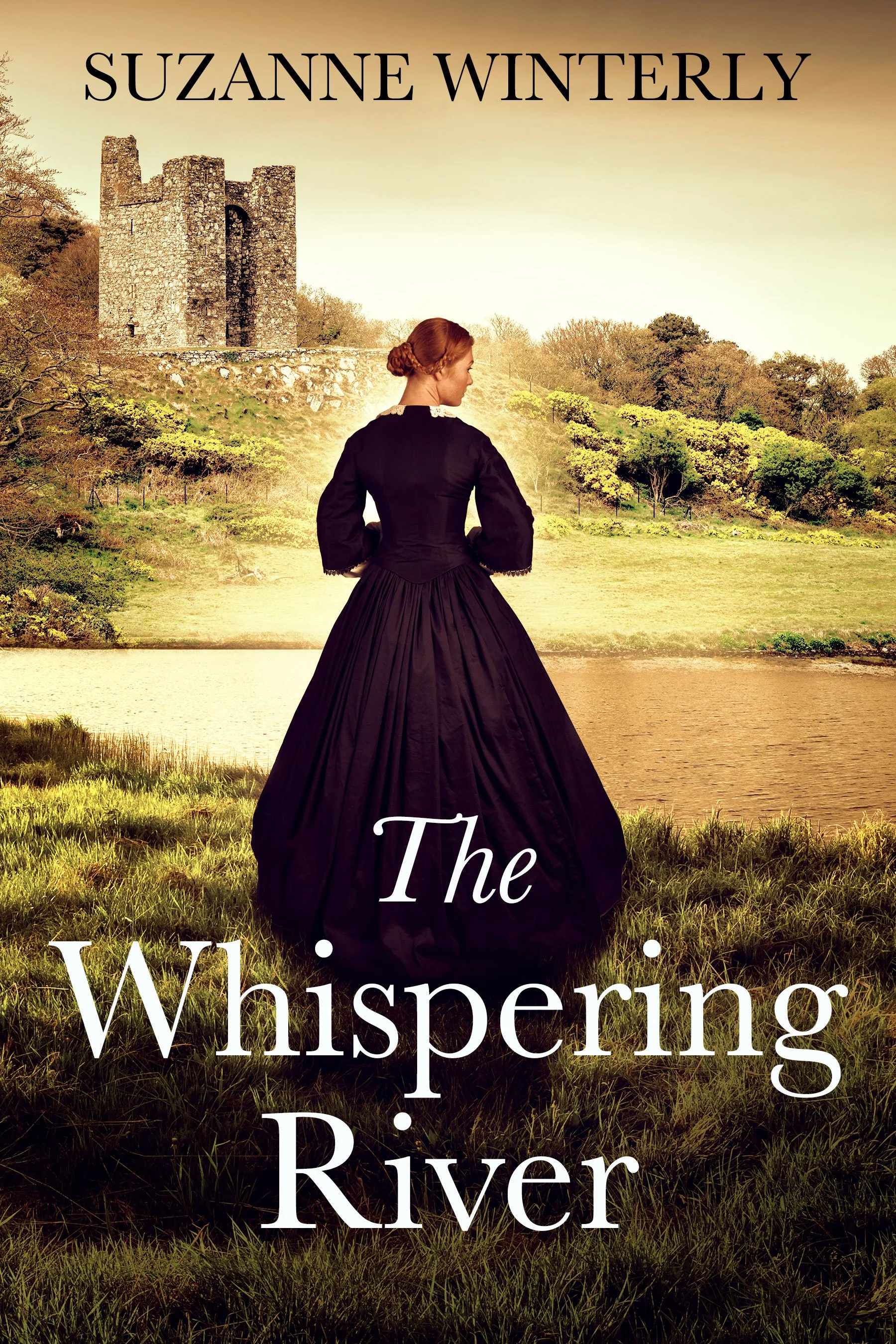
The Whispering River - Where did the idea for the novel come from?

I often get asked where I get my ideas from and it’s actually not a very easy question to answer. I’m sure many authors think the same! Usually for me a book starts with just a tiny seed that sticks in my mind, and I rarely write down these ideas because I know that the better ones will stay with me. I remember reading that Stephen King, the famous horror novelist, said he never made notes before he wrote his books because the good plots remain in his mind. I would agree with that and I’m not good at keeping notebooks.

The Whispering River is the second book in the Foley Family Mystery series and it’s a dual timeline featuring a family researcher, or genealogist, in the present who is hired, usually by an individual or a family, to find out information about their ancestors in the past. This allows me to make the plot more credible so it’s not just constant, random mysteries happening to one person over and over. The families know she’ll be able to find out something about their history, so they employ her. I think this makes it easier to believe.

The Whispering River is set in the Wicklow mountains in Ireland and I wanted to write a story about a woman who was a doctor in the late Victorian era, when it wasn’t easy for her to practise medicine, in fact practically impossible. Some women were allowed to study medical courses but they weren’t actually allowed to receive their degrees. It was a man’s world. She is not a doctor at the time the novel takes place, even though she would love to be, but she is a herbalist so that gives her some scope as a character.

So where did the idea for the novel come from? I think it started with the character of a strong woman wanting to be more than was usually allowed and then something goes wrong and the plot takes off from there.

At the heart of the story is an alarming discovery in the garden in the modern era, and the research that follows uncovers a dark family secret involving a young governess who goes to work for the herbalist.

It was quite a complicated plot to write and it took me maybe six or seven drafts to bring everything together in the end, but that’s not unusual for me! I don’t worry about it; I just keep going until I feel there’s no more I can add.

I don’t write about serial killers or police procedure because I prefer to have a family dynamic at the centre of the novel. Families are complicated, they hide secrets, and they often like to maintain their good name in society. This all adds psychological interest for me as a writer. The members of this particular family are important, even the children, and they all have a role to play in the story.

The Whispering River is available as an e-book, a paperback and also as an audiobook read by the actor Ruth Redman. You will find it on Amazon or other online book stores worldwide.

If you give it a try, I hope you enjoy it. The first novel in the series is called The Family Shadow.
The River Suir Mystery: A Tragic Disappearance in 1826

I was searching through old newspapers recently and came across this sad story. It’s a cold case about a young Quaker woman and a British soldier who both disappeared in the early 19th century. The place was Clonmel, County Tipperary, where I was born and, to this day, no one knows what really happened that night.

Dog Lovers from the Past

I’m addicted to flicking through the old photographs posted by the National Library on Flickr. They attract me in the way peeping through a window into the past would: to catch a glimpse of real people captured in a moment of the 19th century.

My recent research led me to a collection of ‘four-legged’ images, where I soon discovered that people in the Victorian-era, from all walks of life, were just as obsessed with their dogs as we are today.

The Abandoned Village of Glentornan

Glentornan is a deserted village in County Donegal, nestled beside Lough Dunlewey, with a magnificent view of Errigal mountain. Who lived there years ago, and why did they leave?

The Mythology around the Robin

I never feel alone in the garden. As soon as my trowel hits the soil, a flash of orange appears at my feet. There it is, the self-appointed supervisor of all my gardening efforts. The robin has arrived to see what I’m doing on his patch!

Restoration of Secret Victorian Walled Garden at Kylemore Abbey

We were staying at Leenaun in Connamara recently for a school reunion of my husband’s class from over four decades ago! I hadn’t been there for many years, and it was wonderful to see how unspoilt it is; still with its beautiful golden and purple landscape at this time of year. Best of all, from my point of view, was the story of Kylemore Abbey’s restoration of an abandoned garden from decades ago.


True Stories with an Odd Twist

A Mysterious Tapping from a Crate

In October 1941, a porter at Dublin’s North Wall Docks was surprised to hear tapping from a large crate that had been unloaded from a ship from Liverpool, the Slieve Bawn. At first he thought he was imagining this, but he decided to tap back and was immediately answered with another tap from inside. 

Upon opening it, he found a 40-year-old French artist, Maurice Carcassus de Laboujac, semi-conscious and encased in a plaster cast…

The Forty Elephants – A female criminal gang in the Victorian era

London, 1890. A crowd jostled on Oxford Street amidst the cries of market traders, the smell of roasting chestnuts rising into the yellow fog. Two well-dressed women lingered at the corner, watching and waiting. Not long now. A tall gentleman walked past, top hat shining on his dark curls. His hand gripped an ebony cane, which he extended to ward off two urchins lounging against a nearby lamp post. The women exchanged glances. With a nod at her accomplice, Mary stepped forwards and hurried after him, her fingers snaking towards the pocket of his greatcoat.

Dunguaire Castle and its stories

I know why old Irish castles and towers stand on picturesque sites on the edge of the sea or on hillsides. Yes, our ancestors probably admired the views like we would do nowadays, but for them the main purpose was safety. Their homes required prominent positions because they needed to be able to see their enemies advancing from a long way off. It was vital they had time to prepare for an attack. Dunguaire Castle, near Kinvara and situated on the rocky coastline of Galway Bay, is a perfect example.